
THE TABLE PAPA BUILT
A Table Story
by Val White
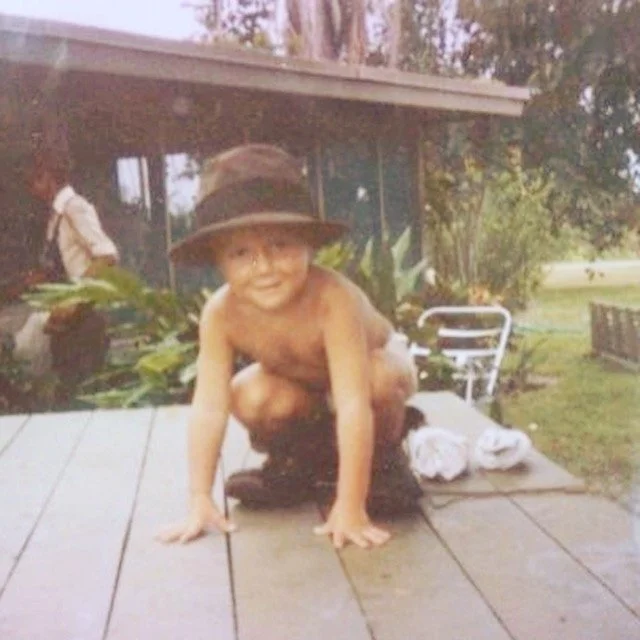
Me atop the table that Papa built
There is a table I still measure all other tables against.
It wasn’t elegant. It wasn’t imported or antique or chosen from a catalog. It was built by hand — oversized, wooden, worn smooth in the places where generations of elbows had rested and children had kicked their legs underneath — by my grandfather, my Papa, who understood that a family as loud and alive as ours required a surface equal to the occasion.
It lived outside, beneath the sprawling arms of the oak trees that surrounded my grandparents’ home — a house filled with Victorian decor and nestled into a few acres of southwest Florida countryside, draped in Spanish moss and the particular golden quiet of a Sunday afternoon.
There were perhaps a hundred of those oaks.
Maybe more.
As a child I never thought to count them.
I only knew that they held the whole world above us like a cathedral, and that beneath them, on the table Papa built, the most important meals of my life took place.
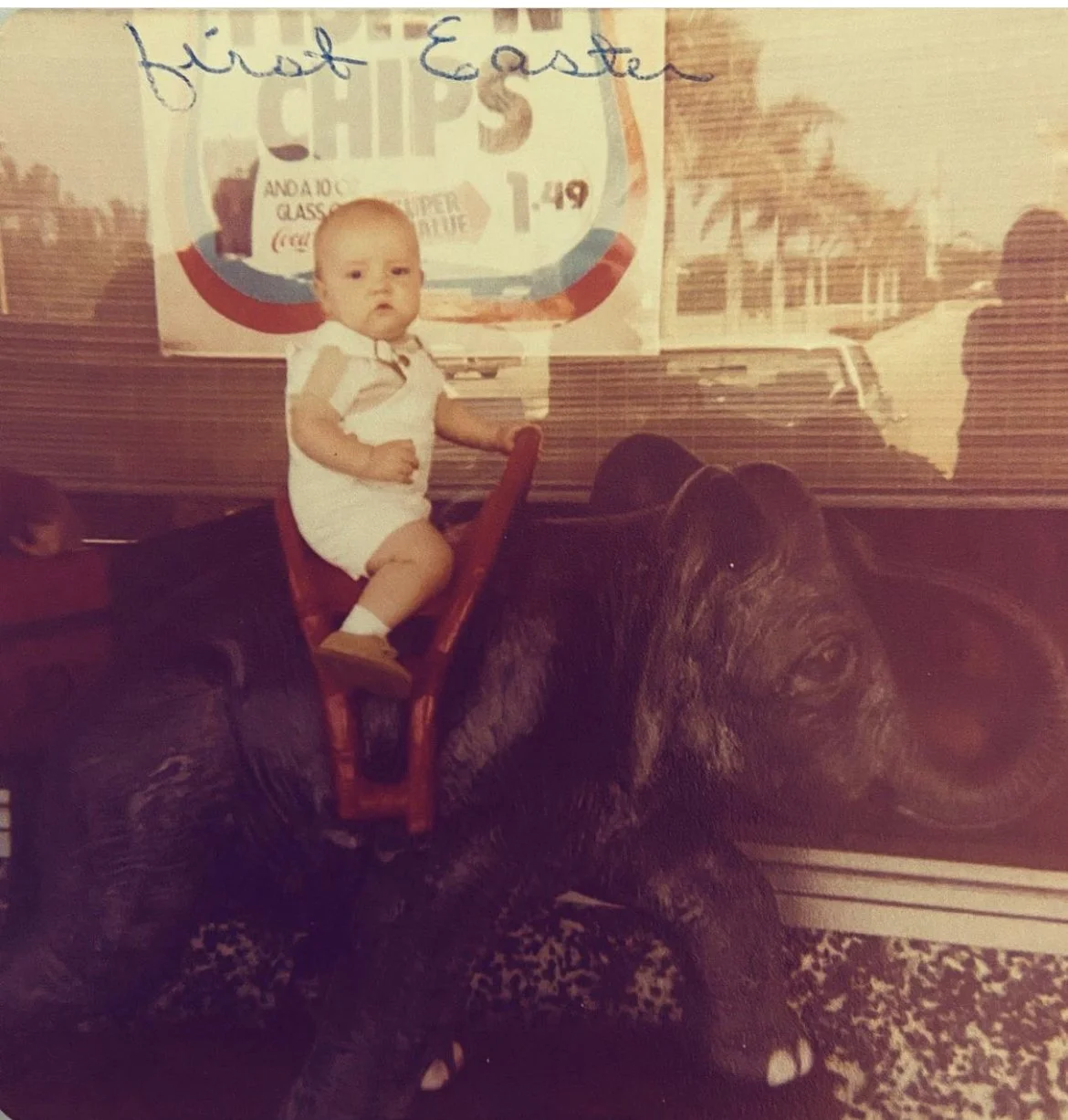
My first Easter in 1978
Easter was the crowning occasion.
It began, as all proper southern Easters must, with the outfit.
I will not pretend this was incidental to the occasion.
The new Easter ensemble was, for me, arguably the spiritual centerpiece of the entire holiday.
Church was meaningful, certainly — though I will note, with some affection and only the gentlest amount of cheek, that our little congregation swelled considerably on Easter Sunday with the faithful who appeared twice a year, on Christmas and Easter, presumably to cover their bases.
After the service, we made our way to my grandparents’, and there it began in earnest — the feast my grandmother had been building toward all week.
The table would be laid outside if the Florida weather cooperated, and it would be laden with the kind of food that has no recipe because the recipe lives only in the hands of the woman who makes it.
We ate until the afternoon softened around us and the oak trees threw long shadows across the yard.
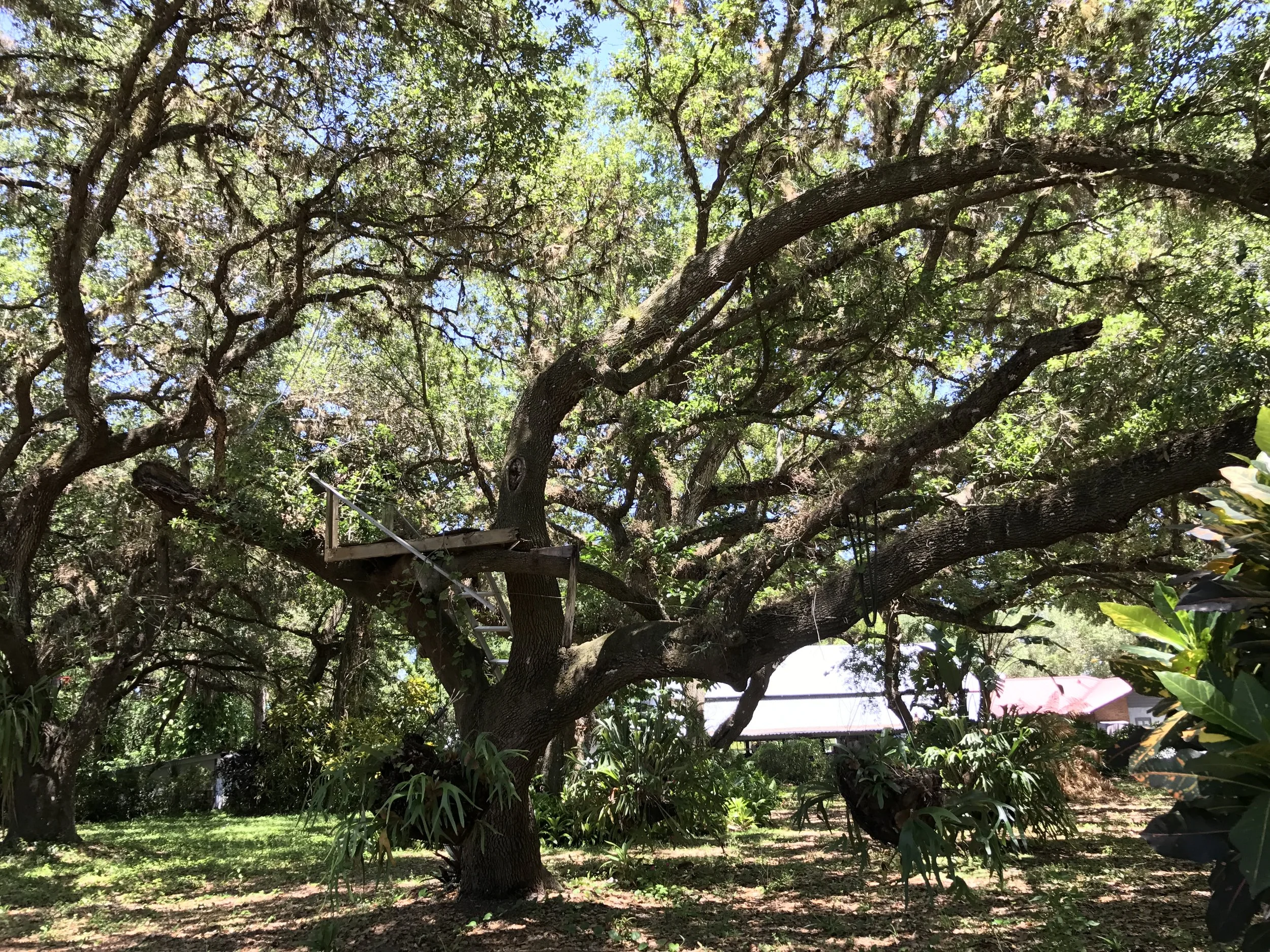
One of the many oaks on my grandparents’ property
And then came the eggs.
The children were herded inside —sometimes a herd of us .. and sometimes only me and one other cousin.. depending on who brought a gaggle of friends along for the hunt — while the adults scattered eggs throughout the garden.
My grandmother’s yard was a thing of beauty in April, flowered and rambling and full of the kind of hiding places that made an egg hunt a genuinely sporting event.
We burst back outside at the signal and tore through the azaleas and the garden beds with the focused intensity of small people who understood that this was serious business.
But here is the part I loved most. The part that made our Easter different, the part I have carried with me like a keepsake through every city and every chapter of my life since.
When the children had found and counted every last egg — and there were many eggs, enough that the counting itself was an event — the roles reversed.
The adults went inside.
And we hid the eggs from them.
I cannot fully explain why this delighted me as profoundly as it did, except to say that there is something deeply satisfying to a child about the sudden, temporary acquisition of power.
We were devious.
We were strategic.
We hid those eggs in places we were reasonably certain the adults — with their larger bodies and their lesser commitment to chaos — would never think to look.
Then we stood back and watched them search, and it was glorious.
Afterward, we would all find our way to the covered porch — adults and children and the general beautiful disorder of a large family in the late afternoon — and someone would crack open the hard-boiled eggs, the brightly dyed ones that smelled of vinegar and spring, and we would eat them simply. Salt. Pepper. Nothing else needed.
Then after a game of croquet we’d retreat inside for an equally competitive game of canasta.
My grandparents were the epitome of canasta people.
The cards would come out and the afternoon would stretch long and slow and punctuated by the particular sounds of a family playing cards together — the slap of a hand laid down, the good-natured argument, the laughter that doesn’t need a reason.
It was, in the truest sense, a curated life. I just didn’t know to call it that yet.
I think about that table often now, the one Papa built. I think about what it meant to gather around something made by hand, something built specifically to hold the people you love.
There is a body remembered wisdom in that kind of table.
It says: you are expected here.
There is room.
Stay as long as you need.
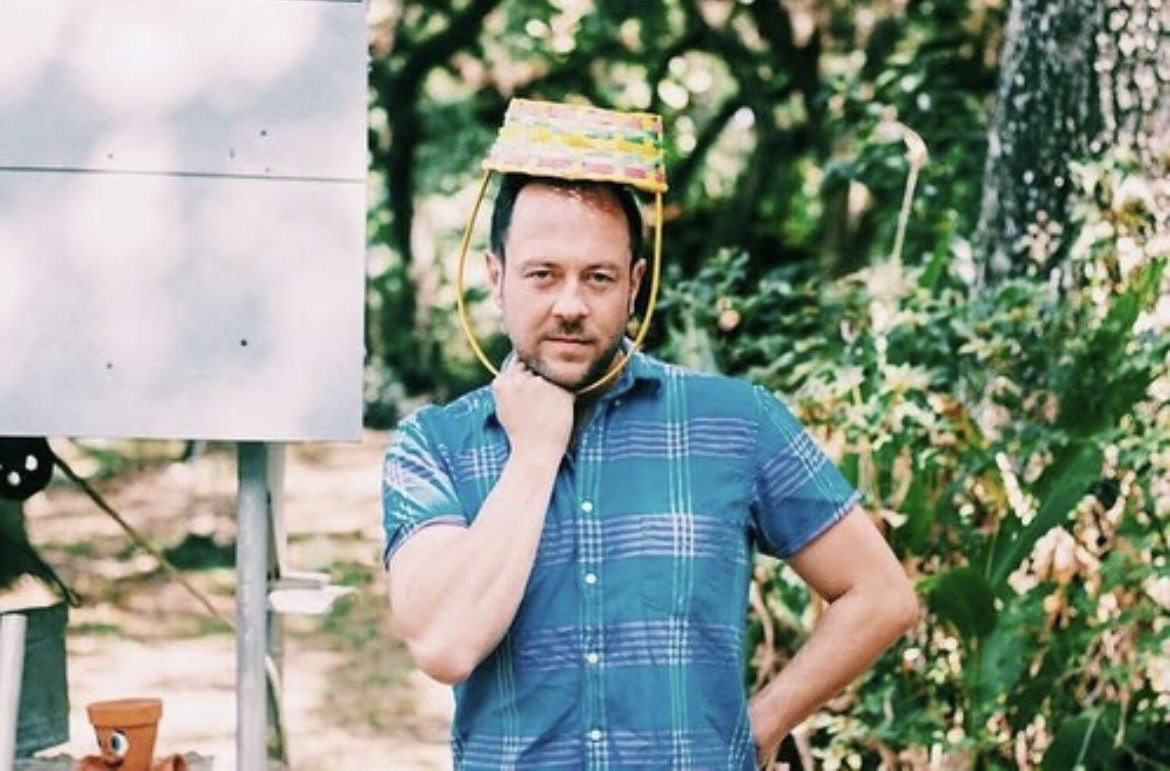
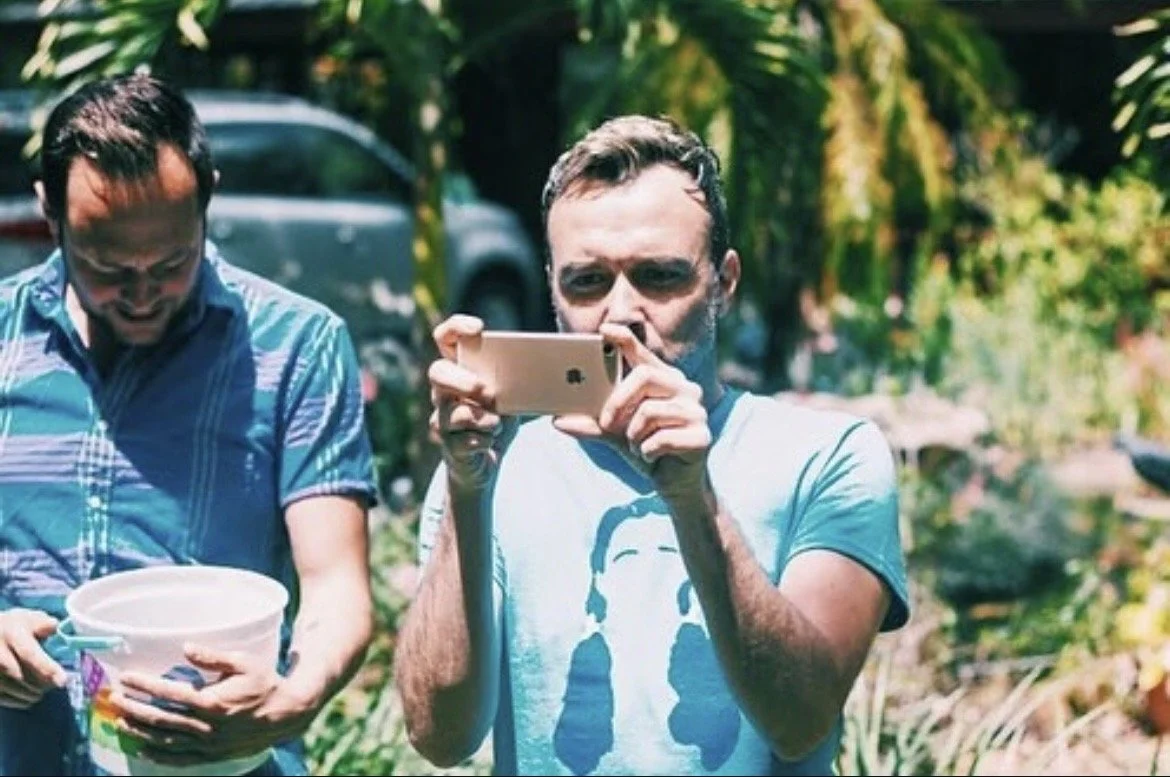
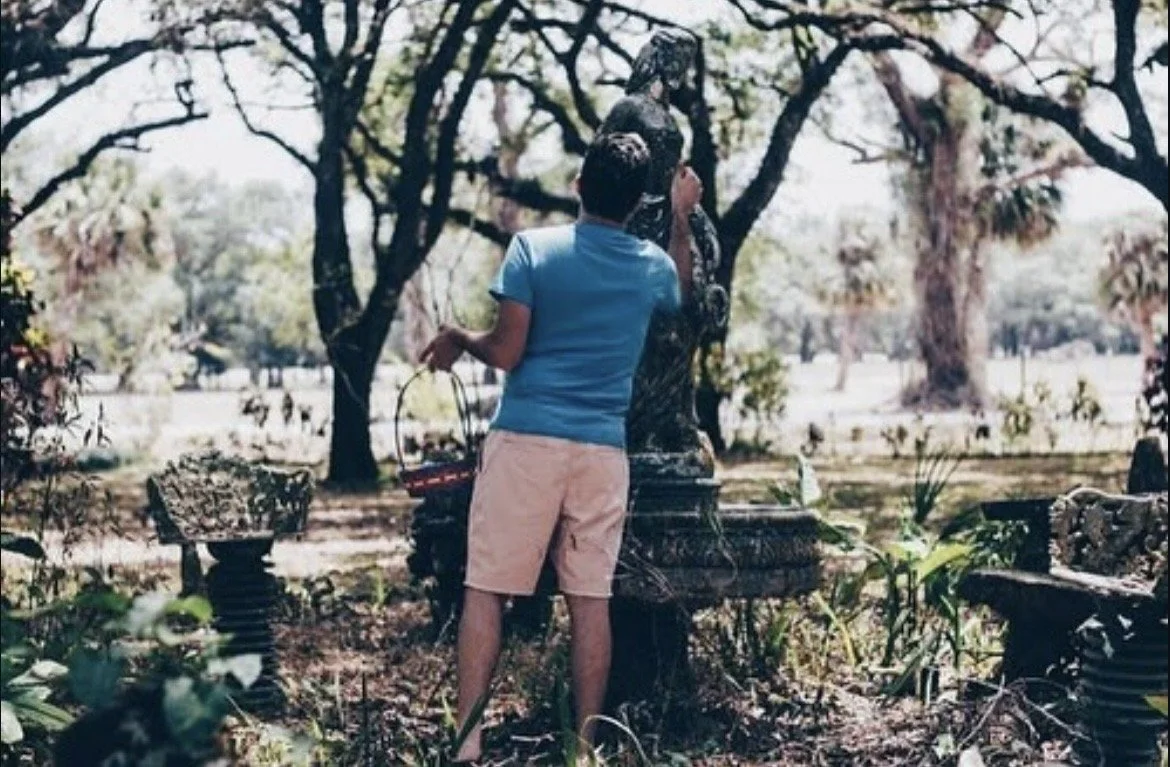
Years later when I introduced Adam to our tradition — the glorious reversal, the hiding of the eggs from the adults.
He took to it with enthusiasm, which pleased me.
What pleased me slightly less, I’ll admit, was his approach to the actual hiding from the kids.
Adam, it turns out, is what I would generously describe as tenderhearted when it comes to the struggle of others.
When a child got stuck — when the searching went on a little too long and the small face began to crumple at the edges — Adam would drift casually in the direction of the hidden egg.
He would say things like “ooh, I wonder if there’s anything interesting over by that bush” in a tone so conspicuous it was practically a treasure map.
I, on the other hand, believe in the full and unabridged Easter experience.
Every man for himself. Every woman for herself. Every toddler, frankly, for themselves.
This is not cruelty.
This is the building of character.
This is the ancestral tradition I am honor-bound to uphold.
It’s only reasonable.
Adam disagrees. We have agreed to disagree — which is, I suppose, its own kind of Easter miracle.
This spring, wherever you find yourself, I hope you find your way back to a table that holds you.
It doesn’t have to be the one you grew up around — sometimes we have to build our own, the way Papa did.
But find the table.
Set it with something beautiful. Crack open something simple and share it with someone you love.
Bring the salt. Bring the pepper.
Stay for the cards.
