
THE ANCESTOR EXERCISE
A Practice for Meeting the People Who Made You
by Val White
Why Ancestors Matter to the Living
There is a concept in many wisdom traditions — from indigenous cultures to Jungian psychology to modern somatic therapy — that we carry our ancestors within us. Not metaphorically, though the metaphor is beautiful. Literally. Epigenetically. The experiences of those who came before us leave traces in our biology, our nervous systems, our instincts and fears and inexplicable strengths.
The grandmother whose resilience you've always admired but couldn't explain. The great-uncle whose creativity seemed to skip a generation and land, intact, in you. The pattern of courage that appears and reappears across centuries of your family's story, surfacing in different forms but recognizable, always recognizable, as something essentially yours.
When I learned that my ancestors were men who led nations, who made consequential decisions under extraordinary pressure, who understood service and standard and the weight of responsibility — something shifted in me.
Not with arrogance. With permission.
A quiet, cellular recognition that the capacity for great things was not something I needed to acquire from the outside. It was something I had always been carrying.
That is what meeting your ancestors can do.
It can give you back to yourself.
Five Steps to Meeting Your Ancestors
You do not need Ancestry.com for this — though if genealogical research calls to you, I highly recommend the obsession. What you need is quietness, curiosity, and a willingness to be surprised by what you find.
Step One: Begin with what you know.
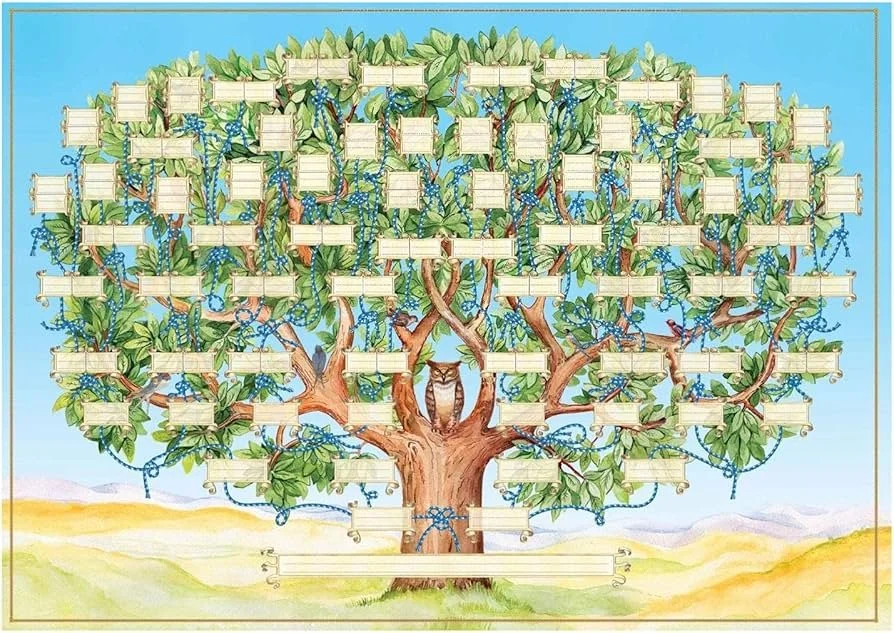
Sit with a piece of paper and write down every name you know from your family history. Go as far back as memory and family story allow. Your parents, grandparents, great-grandparents. The ones whose names you know and the ones who exist only as fragments — the grandmother who was a painter, the great-uncle who never spoke about the war.
Include what you know of their qualities. Their gifts. Their struggles. Their defining characteristics. You are not writing a family history. You are building a character map.
Step Two: Find the thread.
Look at what you've written and ask: what repeats? What quality, what gift, what wound appears more than once across the generations? Creativity. Resilience. A particular kind of stubbornness that is really just determination in disguise. A sensitivity that was never quite understood in its time.
That thread is yours. It was always yours. You didn't inherit it — you are it, in this generation's form.
Step Three: Choose one ancestor to meet.
From everything you've written, choose one person — known or dimly known — whose qualities call to you most strongly. Someone whose life, even in fragments, makes you feel something. Recognition. Admiration. Compassion. Curiosity.
This is your ancestor for this season.
Step Four: Research, imagine, and listen.
If you can research them — do. Census records, family stories, old photographs, local history. If you cannot, imagine. Write a paragraph about who they might have been. What they might have cared about. What they would make of the world you're living in now.
Then sit quietly — this is the part that sounds strange until you try it — and ask them something. A question you genuinely need an answer to. Something about courage, or direction, or the thing you're afraid of, or the thing you're becoming.
Listen to what arises. Not with mysticism but with openness. The answers that come in that quality of quiet are often the ones we already knew and needed permission to hear.
Step Five: Carry them forward.
Choose one quality from this ancestor — one specific, nameable quality — that you will consciously embody this season. Not perform. Embody. Let it inform a decision you make, a standard you hold, a way of moving through difficulty.
This is how ancestors stay alive. Not in genealogy charts or Wikipedia articles. In the choices of the people who carry their blood.
You come from someone remarkable. Probably many someones.
This spring, I invite you to go find them.
They have things to tell you about who you already are.
